Is Gold a Good Investment? An Honest, Data-Backed Answer

Straight answer
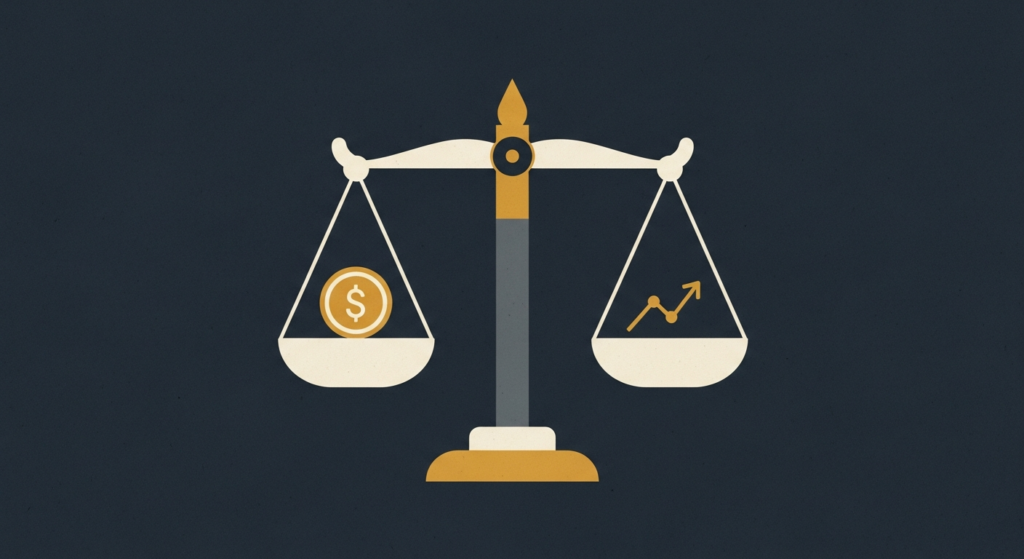
Gold can be a reasonable small part of a long-term portfolio — a hedge against inflation, a falling dollar, and market panic. But it pays no dividends or interest, it has historically trailed stocks over long stretches, and it costs money to store and insure. For most people it works best as 5–10% of a portfolio, not the core of one. If you’re buying out of fear, or you need the money within a few years, it’s probably not the right move.
“Is gold a good investment?” is the wrong question. The useful question is “good for what, and good for whom?” Gold is a tool with a specific job — protecting purchasing power and adding ballast when other assets fall. Judged against that job, it can be excellent. Judged as an engine for growing wealth, it usually disappoints. This guide gives you the honest case on both sides, the actual numbers, and a clear way to decide.
What “a good investment” really means for gold
Most assets earn their keep by producing something: stocks pay dividends and grow with company earnings, bonds pay interest, rental property generates rent. Gold produces nothing. A one-ounce coin you buy today is the same one ounce a century from now. Its only path to profit is selling it later to someone who’ll pay more.
That’s not a flaw, exactly — it’s the whole point. Gold isn’t trying to compound; it’s trying to hold value when the things around it don’t. So the right yardstick isn’t “did it beat the S&P 500?” It’s “did it protect me when I needed protection, without costing too much to hold the rest of the time?”
The honest case for gold
It has held purchasing power over very long periods
Across decades, gold has roughly tracked inflation — an ounce buys a similar basket of goods over very long horizons. That’s a real, if unglamorous, function: it resists the slow erosion that eats cash sitting in a low-yield account.
It tends to hold up when stocks fall hard
Gold frequently rises, or at least holds, during equity-market crises and periods of acute geopolitical or financial stress. Because it often moves differently from stocks and bonds, a modest allocation can lower the swings of an overall portfolio — the textbook argument for diversification.
Central banks are buying — and that matters
Emerging-market central banks have been steady, large buyers of physical gold as they diversify reserves away from a heavy reliance on the U.S. dollar. That structural demand provides a floor under prices that didn’t exist in earlier eras, and it’s one reason analysts have raised long-term forecasts.
The honest case against gold
This is the part dealers leave out. None of it means “never buy gold.” It means know what you’re signing up for.
- No income. Gold pays no dividend or interest. While you hold it, it earns nothing — the opposite of a dividend stock or a bond.
- It has trailed stocks over the long run. Over multi-decade periods the broad stock market has generally outpaced gold by a wide margin, because stocks represent growing, profit-generating businesses and gold does not. Recent years have been unusually strong for gold, which can make its long-run record look better than it is.
- Real carrying costs. Physical gold has to be stored and insured. A home safe plus a rider on your insurance, or an allocated vault, all cost money that quietly eats into returns.
- Higher tax rate. The IRS treats physical gold and silver as collectibles, so long-term gains can be taxed at a rate up to 28% — higher than the long-term capital-gains rate on most stocks.
- Dealer premiums and spreads. You pay above the spot price to buy (typically 3–8% for common coins) and sell below it. That round-trip cost means the price has to rise meaningfully before you break even.
Gold vs stocks: the numbers, honestly
Here’s the comparison dealers rarely show you side by side. Treat exact figures as illustrative — they depend heavily on the start and end dates — but the shape is consistent: gold protects, stocks compound.
| Measure | Physical gold | S&P 500 (dividends reinvested) |
|---|---|---|
| Approx. value today | ~$65,000–83,000 | ~$90,000+ |
| Rough annual return | ~9–11% | ~10% |
| Pays income? | No | Yes (dividends) |
| Carrying cost | Storage + insurance | ~0 (low-cost index fund) |
The last two decades were an unusually good window for gold — it captured both the 2008 crisis and a recent inflation-driven surge. Over more typical multi-decade stretches, gold’s long-run return has been closer to 4–6% a year, and the gap with stocks widens. The lesson isn’t “gold is bad.” It’s that gold is a hedge, not a growth engine — and you shouldn’t expect it to be both.
Want the full breakdown? See Gold vs Stocks: The Honest Comparison.
How much gold should you actually own?
Most financial planners who include gold at all suggest capping precious metals at roughly 5–10% of a total portfolio. The logic: enough to provide a hedge and lower portfolio swings, but not so much that gold’s lack of income and growth drags down your long-term results. Concentrating a large share of your savings in any single non-productive asset — gold included — is how people get hurt.
Is gold or silver the better buy?
Short version: gold is steadier and the better diversifier; silver is cheaper per ounce, more volatile, and tied to industrial demand (solar, electronics, EVs), which gives it more upside and more downside. Which fits depends on your risk tolerance and goals. We compare them in detail in Gold vs Silver: Which Should You Buy?
- You might need this money within the next few years — gold can fall hard in the short term.
- You’re carrying high-interest debt. Paying that off is a guaranteed, tax-free “return.”
- You don’t yet have an emergency fund and a diversified base of lower-cost investments.
- You’re buying because a salesperson or a headline told you the dollar is about to collapse.
- You expect guaranteed returns. Gold offers none.
- You’d be paying a 20–30%+ premium for “rare” or “collectible” coins instead of standard bullion.
What the skeptics get right (and wrong)
Two of the loudest critics are worth taking seriously. Warren Buffett has long dismissed gold as a “pet rock” and called buying it “going long on fear” — his point being that gold produces nothing and only rises when anxiety does, while a business compounds value over time. He’s right that gold won’t build wealth like a productive asset. Notably, though, Buffett has bought silver, because it has real industrial demand.
Dave Ramsey generally advises against precious metals, arguing they generate no income and are driven by fear and speculation. He’s right that metals are a poor primary wealth-builder. Where both critiques fall short: a small, deliberate gold allocation isn’t a bet on getting rich — it’s insurance. You don’t buy insurance expecting it to outperform; you buy it for the scenario where everything else is on fire.
If you decide gold belongs in your plan
Buying well matters as much as deciding to buy. Understand the premium over spot, stick to recognized bullion from vetted dealers, and decide how you’ll store it before it arrives. Start here:
Every guide in this series
Frequently asked questions
Is it smart to invest in gold right now?
It depends on your goal and time horizon. As a long-term hedge and diversifier, a small allocation can make sense in most conditions. As a short-term bet, chasing record-high prices is risky because gold pays no income and can correct sharply. If you do buy, dollar-cost averaging — buying a fixed amount on a schedule — beats trying to time the perfect entry. More on timing →
What is the downside of buying gold?
The main downsides: it generates no income, it has historically underperformed stocks over the long run, physical gold costs money to store and insure, gains are taxed at the higher collectibles rate (up to 28%), and dealer premiums mean the price must rise before you break even. See the full downside breakdown →
Is gold a better investment than stocks?
Over long periods, stocks have generally produced higher returns because they represent growing, profit-generating businesses. Gold is better at one specific job — holding value and adding ballast during crises and high inflation. Most experts frame it as “both, in proportion,” not “one or the other.”
How much of my portfolio should be in gold?
Planners who include gold typically suggest 5–10% of a total portfolio at most. Enough to hedge, not so much that its lack of income and growth holds you back.
Does gold protect against inflation?
Over very long periods, gold has roughly kept pace with inflation, so it can preserve purchasing power. Over shorter windows the relationship is loose — gold can lag inflation for years. Read the nuance →
All “Is It a Good Investment?” guides
Explore the guides in this series
33 in-depth guides
Central Bank Gold Buying & Demand
Central banks — led by China, Russia, India, Turkey, and Poland — are buying record gold to diversify reserves, cut dollar reliance, and hold an asset no government can freeze. A real tailwind, but not a reason to over-concentrate.
Read the guide02Does Gold Actually Protect You in a Recession?
Gold’s recession record is mixed — it rose in some downturns but fell hard early in the 2008 and 2020 panics. Which kind of downturn it helps in, and which kind it doesn’t.
Read the guide03Does Gold Outperform the S&P 500?
Over the long run, no — the S&P 500 generally beats gold, because stocks earn and compound while gold sits. But in crises and inflation spells gold wins. The answer depends entirely on the dates you pick.
Read the guide04Gold Price Forecasts 2026–2030: What Analysts Say (and Why to Be Skeptical)
Analyst targets for 2030 gold span an enormous range — $5,000 to $10,000+ — and every one is illustrative opinion, not a plan. What they’re based on, why they’re unreliable, and how to act sensibly.
Read the guide05Gold vs Bitcoin: Is Crypto ‘Digital Gold’?
“Digital gold” is a marketing analogy, not an established fact. A sober look at scarcity, volatility, crisis behavior, custody, and regulatory risk — and why the two aren’t interchangeable.
Read the guide06Gold vs Real Estate as an Inflation Hedge
They’re complementary, not rivals — real estate pays income and uses leverage; gold is liquid and low-upkeep. An honest comparison of two hard assets, and how they hedge inflation differently.
Read the guide07Gold vs Silver: Which Should You Buy?
It depends on what you want the metal to do. Gold is steadier and more liquid; silver is cheaper and more volatile. Price, risk, the gold-silver ratio, and which fits your goals.
Read the guide08Gold vs Stocks (S&P 500): The Honest Comparison
Over multi-decade periods, the S&P 500 has out-returned gold — stocks earn and pay dividends while gold just sits. But gold’s crisis diversification is real. Returns, volatility, costs, and why most own both.
Read the guide09Gold’s Real Historical Returns: 10, 20 & 50 Years
There’s no single “gold return” — it depends almost entirely on the years you pick. What gold actually did over 10, 20, and 50 years, the recent hot window vs the ~4–6% long-run norm, and a realistic expectation.
Read the guide10How Much Gold Should a Beginner Own?
For most beginners, the honest answer is none — not yet. The prerequisites to clear first, then a small 5–10% slice at most. How to start small, and the mistakes to avoid early.
Read the guide11How Much of Your Portfolio Should Be in Gold?
Most planners who use gold at all cap it near 5–10% of a portfolio — and a fair number argue for 0%. How your number shifts with age, goals, and nerves, plus why rebalancing matters.
Read the guide12How Much Will Gold Be Worth by 2030?
No one knows — and the published 2030 targets, running from ~$5,000 to $10,000+, prove it. What drives the bull and bear cases, why the wide range signals low confidence, and what to do instead.
Read the guide13Is Gold a Better Investment Than Stocks?
For long-run growth, no — over decades, stocks out-return gold on dividends and earnings. Gold’s edge is crisis diversification. Why most experts say own both, with gold capped around 5–10%.
Read the guide14Is Gold in a Bubble Right Now?
Nobody knows, and anyone certain is selling something. A measured look at the froth signals, the fundamental support beneath the price, why top-calls keep misfiring — and what a sensible investor does instead.
Read the guide15Is Gold Just a Bet on Fear?
Partly yes — gold rises when anxiety rises, and Buffett called buying it “going long on fear.” But it also tracks real rates, the dollar, and central-bank demand. Why the slogan oversimplifies, and the trap to avoid.
Read the guide16Is Gold No Longer a Good Investment?
“Gold is dead” claims usually follow a price run-up or a flat stretch — and the framing is wrong, because gold’s role hasn’t changed. What could genuinely weaken it, and why a modest allocation still works.
Read the guide17Is Gold or Silver the Better Investment?
Neither is universally better. Gold is steadier and the better diversifier; silver is cheaper, more volatile, and half-industrial. Which suits your risk tolerance and goal — and why a split can make sense.
Read the guide18Is Gold Really an Inflation Hedge?
Yes — but only over long horizons. Across decades gold has roughly kept pace with inflation; over years it can lag badly. What really drives its price, and how to use it sensibly.
Read the guide19Is It Smart to Invest in Gold Right Now?
It depends on your goal and time horizon, not the headline price. The honest case for and against buying now, and how much to hold if you decide it belongs in your plan.
Read the guide20The Gold-Silver Ratio Explained (and the 80/50 Rule)
The gold-silver ratio is simply how many ounces of silver buy one ounce of gold. What high vs low readings mean, the limits of the 80/50 rule, and why it’s context — not a timing signal.
Read the guide21The Opportunity Cost of Holding Gold
The opportunity cost of gold is what your money would have earned elsewhere — the dividends, interest, and compounding you give up holding an asset that produces no income. The real cost vs stocks, and how to keep it small.
Read the guide22What Actually Drives the Gold Price
Gold is driven mostly by real interest rates, then the US dollar, then fear and crisis demand — with central-bank buying and mine supply shaping the slow background. A ranked, honest breakdown of what moves it.
Read the guide23What Dave Ramsey Gets Right and Wrong About Gold
Dave Ramsey advises against gold — a no-income, fear-driven asset he says trails growth funds. What he gets right, and the diversification case he skips over. An even-handed take.
Read the guide24What If You Invested $1,000 in Gold 10 Years Ago?
Roughly $2,600–$3,600 today — about 160–260% total, or near 13% a year, depending on the exact dates. Why that strong window is illustrative, not a repeatable forecast.
Read the guide25What If You Invested $10,000 in Gold 20 Years Ago?
Roughly $65,000–$83,000 today — a 560–700% gain, or about 9–11% a year. But the window flattered gold, and stocks usually did better over the same stretch. The math, and the honest caveat.
Read the guide26What Is the 10-Year Return on Gold?
Gold returned roughly 160–260% over the last decade — about 10–14% a year, well above its 4–6% long-run norm. Why it ran hot, and what’s realistic to expect from here.
Read the guide27What Is the Downside of Buying Gold?
Gold pays no income, has trailed stocks over long horizons, and physical metal carries real costs — 3–8% premiums, storage, insurance, and up to 28% collectibles tax. The candid list of downsides.
Read the guide28What Is the Safest Asset in the World?
There’s no single safest asset — “safe” depends on the risk you’re guarding against. Cash and Treasuries protect dollars short-term; gold protects purchasing power long-term. The honest trade-offs, and where gold fits.
Read the guide29When NOT to Buy Gold or Silver
Don’t buy gold or silver if you might need the money within a few years, you’re carrying high-interest debt, or you don’t yet have an emergency fund and a diversified base. The honest don’t-buy list.
Read the guide30Which Billionaires Invest in Gold (and Why)?
Some well-known investors hold meaningful gold — usually as a hedge, not a bet on returns — while others like Buffett avoid it. Why they hold it, why others don’t, and why copying them is a weak reason to buy.
Read the guide31Why Warren Buffett Avoids Gold (and Bought Silver)
Buffett avoids gold because it produces nothing — no dividends, no interest, no earnings — and calls it “going long on fear.” Yet he once bought silver. His real reasoning, and the honest counterpoint.
Read the guide32Will Gold Ever Reach $10,000 an Ounce?
Possible but speculative. The conditions that would have to line up for $10,000 gold, the scenarios where it doesn’t happen — and why a price target is not a plan.
Read the guide33Will Gold Prices Go Up in 2026?
Nobody can reliably say. The bullish and bearish factors analysts actually cite, why every forecast is just an opinion — and what to do instead of betting on a number.
Read the guide