Is Gold or Silver the Better Investment?

Straight answer
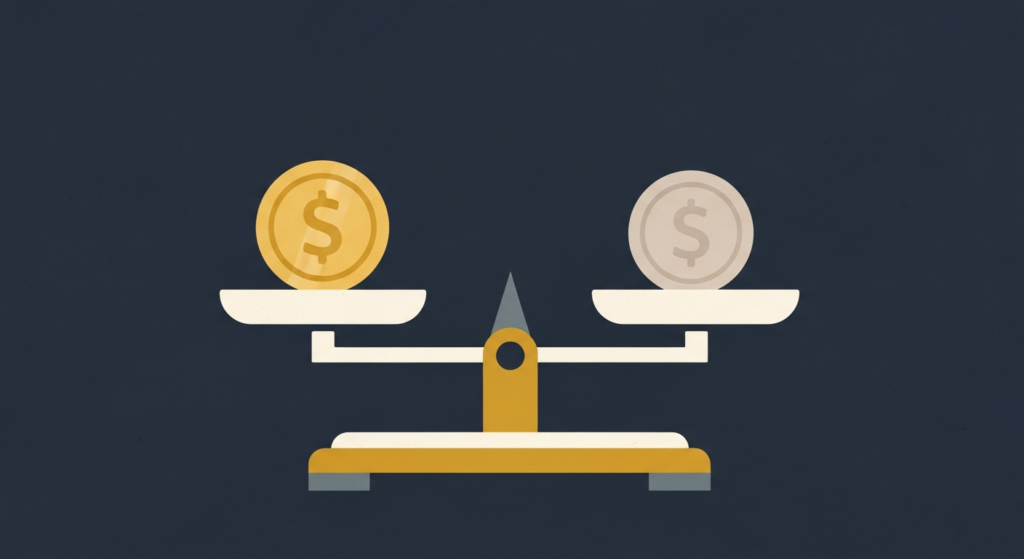
Neither is universally better. Gold is steadier, more liquid, and a cleaner portfolio diversifier; silver is cheaper per ounce, far more volatile, and tied to industrial demand, which gives it more upside and more downside. Which one suits you depends on your risk tolerance and your goal: gold for stability and wealth preservation, silver if you can stomach big swings for the chance of larger gains. Many investors hold some of each.
“Gold or silver” sounds like a contest with a winner, but the two metals do different jobs. The right question is not which is better in the abstract; it is which fits the risk you are willing to take and what you want the metal to do in your portfolio.
Gold’s profile: steadier and a better diversifier
Gold is the calmer of the two. It is deeper and more liquid, less swingy day to day, and its price is driven mainly by real interest rates, the US dollar, and investor fear rather than by factory orders. That makes it a more reliable diversifier: it often holds up, or even rises, when stocks fall, which is the main reason most advisors include any metal at all.
The trade-off is that gold rarely doubles overnight. It tends to grind out long-run returns in the low-to-mid single digits over typical multi-decade stretches, with stronger windows along the way. It pays no dividend or interest, and you still buy above spot and sell below it. If your goal is to preserve wealth and smooth a portfolio rather than to swing for big gains, gold is usually the better tool. For the full head-to-head, see our deep comparison of gold versus silver.
Silver’s profile: cheaper, more volatile, more industrial
Silver costs a fraction of gold per ounce, which makes it easy to start small and feels approachable. But the low sticker price hides higher risk. Silver is meaningfully more volatile than gold, with sharper rallies and sharper crashes, partly because the market is smaller and partly because roughly half of demand is industrial.
That industrial side, solar panels, EVs, and electronics, means silver behaves a bit like a growth bet as well as a metal. When manufacturing and clean-energy demand run hot, silver can outpace gold; when the economy slows, it can fall harder. Premiums also tend to run higher than gold’s, typically 5% to 15% over spot for coins, so the round-trip cost bites more on a cheaper metal. If you want exposure with more upside and can accept more downside, silver is the more aggressive choice. We cover the practical side of stacking in our guide to buying silver.
Who each one suits
In practice the choice is rarely all-or-nothing. A common approach is to anchor a metals allocation in gold for stability and add a smaller slice of silver for extra upside. Whichever mix you pick, most advisors suggest keeping precious metals to roughly 5% to 10% of a portfolio so one volatile asset never decides your future.
The gold-silver ratio can tip the timing
If you have decided to own both, the gold-silver ratio, how many ounces of silver it takes to buy one ounce of gold, is a rough gauge of which looks cheap relative to the other. A historically high ratio has often meant silver is undervalued versus gold, and a low ratio the reverse. It is a directional signal, not a guarantee, and it works better for rebalancing between the two than for market timing. We walk through it in our guide to the gold-silver ratio. For the bigger question of whether either metal belongs in your plan at all, start with our hub on whether gold is a good investment. This is general education, not personal financial advice.
Is gold or silver the better investment?
Neither is better for everyone. Gold is steadier, more liquid, and a cleaner diversifier, which suits wealth preservation and risk-averse investors. Silver is cheaper per ounce but more volatile and tied to industrial demand, giving it more upside and more downside. The better choice depends on your risk tolerance and goal, and many investors hold both, anchored in gold with a smaller slice of silver.
Why is silver more volatile than gold?
Silver trades in a smaller market, so the same flow of money moves its price more. Roughly half of silver demand is industrial, in solar panels, EVs, and electronics, so it rises and falls with the economy as well as with investor sentiment. That combination produces sharper rallies and sharper crashes than gold, which is driven mainly by real interest rates, the dollar, and fear.
How does the gold-silver ratio help me choose?
The ratio measures how many ounces of silver equal one ounce of gold. A historically high ratio has often signaled that silver is cheap relative to gold, and a low ratio the reverse. It is a directional guide for rebalancing between the two metals rather than a precise timing tool, so treat it as one input, not a buy or sell trigger.