Gold vs Silver: Which Should You Buy?

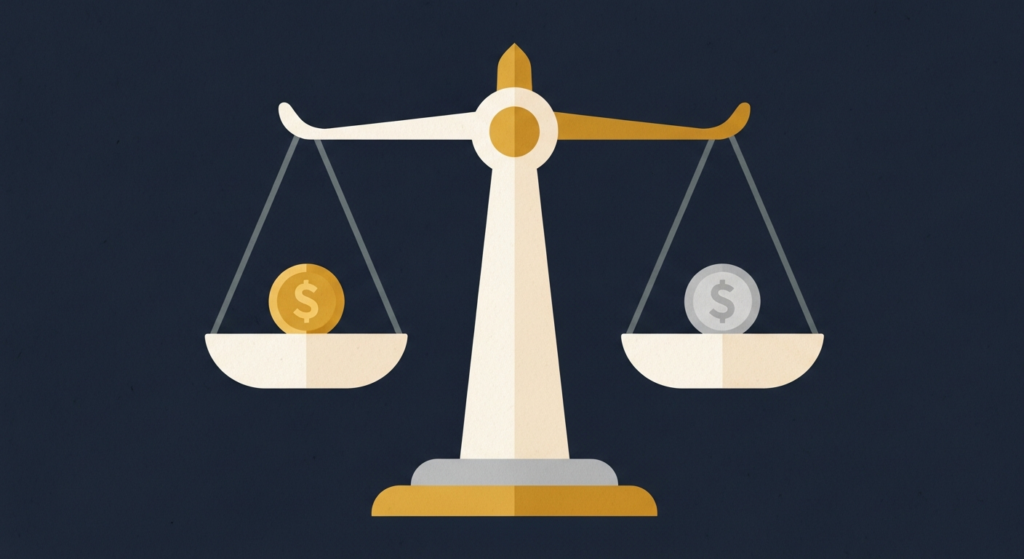
Straight answer
It depends on what you want the metal to do. Gold is steadier, more liquid, and the better all-weather diversifier — the choice if you want ballast and can hold for years. Silver is far cheaper per ounce and tied to industrial demand (solar, EVs, electronics), which gives it more upside and more downside. If you want stability, lean gold. If you want a smaller-dollar, higher-risk position and can stomach big swings, silver. Many people who buy metals own some of both.
Gold and silver get lumped together as “precious metals,” but they behave like two different investments. One is mostly a store of value; the other is half store-of-value, half industrial commodity. That difference — not the shine — is what should decide which one (or how much of each) belongs in your plan. Here’s the honest side-by-side.
The core difference in one sentence
Gold is driven almost entirely by investment and fear; silver is driven by both investment demand and real-world industrial use. Roughly half of silver’s annual demand comes from industry — circuit boards, solar panels, electric vehicles, medical devices — while gold’s industrial use is small. That single fact explains nearly every other difference between them: why silver swings harder, why it can run up faster in a boom, and why it can fall further when the economy slows.
Price per ounce and cost of entry
The most obvious difference is price. Gold trades in the low thousands of dollars per ounce; silver trades in the tens of dollars. That makes silver the easier entry point — you can start with a single tube of one-ounce coins for a couple hundred dollars, where one gold coin is a four-figure decision.
The trade-off is hidden in the premium. Dealer markups over the spot price tend to run higher on silver — often 5–15% for common coins versus roughly 3–8% on gold — because the work of minting, shipping, and insuring a given dollar amount is spread across a lot more metal. Silver is also bulkier and heavier to store and ship per dollar of value: $25,000 in silver is a load of boxes; $25,000 in gold fits in your palm. For more on what you’re really paying, see premiums over spot.
Volatility: silver’s double edge
Silver moves more than gold — usually a lot more, in both directions. In strong precious-metals rallies, silver often outpaces gold by a wide margin; in downturns, it tends to fall harder and faster. That’s the industrial demand showing up: when the economy is booming, factories want silver and investors pile in, so it can spike. When growth slows, that same industrial demand evaporates and the price can drop sharply.
Gold, by contrast, is the calmer of the two. Its price is moved mainly by real interest rates, the U.S. dollar, and fear rather than the factory floor, so it tends to hold steadier through cycles. If a 30–40% swing in a single year would make you panic-sell, that’s the strongest argument for leaning toward gold.
Liquidity and selling
Both metals are liquid, but gold is more so. A standard one-ounce gold coin is recognized and bought worldwide, and you can move a large amount of value quickly. Selling a comparable dollar amount of silver means moving far more physical metal, which can mean more handling, higher shipping, and occasionally a wider spread between what you buy and sell for. For an emergency “I need value I can move fast” asset, gold has the edge.
Gold vs silver, side by side
| Factor | Gold | Silver |
|---|---|---|
| Price per ounce | Low thousands $ | Tens of $ |
| Cost to start | Higher (one coin = four figures) | Lower (easy entry) |
| Typical dealer premium | ~3–8% on common coins | ~5–15% on common coins |
| Volatility | Lower — steadier | Higher — bigger swings up and down |
| Main price drivers | Real rates, the dollar, fear | Investment demand + industry (solar, EVs, electronics) |
| Diversifier quality | Stronger ballast in crises | Good, but more economy-linked |
| Liquidity | Very high; easy to move large value | High, but bulkier per dollar |
| Storage per $ | Compact | Bulky and heavy |
| Tax treatment | Both treated as collectibles — long-term gains taxed up to 28% | |
Note the last row: the IRS treats both physical gold and silver as collectibles, so long-term gains on either can be taxed at a rate up to 28% — higher than the rate on most stocks. The tax math is the same for both. For the full picture, see gold and silver taxes.
The gold-silver ratio
One number some investors watch is the gold-silver ratio — how many ounces of silver it takes to buy one ounce of gold. If gold is $2,400 and silver is $30, the ratio is 80. The idea behind watching it: when the ratio is historically high (say, above 80), silver may be “cheap” relative to gold; when it’s low (say, near 50 or below), gold may be the relative value.
Some traders use this to rotate — buying silver when the ratio is high, swapping toward gold when it falls, a rough rule sometimes called the 80/50 approach. Treat it as one signal, not a crystal ball: the ratio can stay stretched for years, and acting on it means timing two metals instead of one. It’s a useful lens, not a guarantee. We unpack how it works, and its limits, in the gold-silver ratio.
What Buffett did — and why it’s telling
Warren Buffett is famously cold on gold. He’s called it a “pet rock” and described buying it as “going long on fear,” because gold produces nothing and only rises when anxiety does. Yet Buffett’s company once bought a large position in silver. The reason captures the whole gold-vs-silver distinction: he saw silver not as a fear trade but as an industrial commodity with real, growing demand — something that gets used up, not just stored in a vault.
That’s the honest case for silver in a sentence: it’s part precious metal, part industrial input. It’s also the honest warning — because it’s tied to the economy, silver carries commodity-style risk that gold doesn’t. (We cover Buffett’s broader skepticism in why Buffett avoids gold.)
Which one suits you?
Match the metal to your goal and your stomach, not to which one “feels” like the better deal.
- You want stability and a hedge: lean gold. It’s the steadier diversifier, more liquid, and easier to store. Best when you already own a diversified base and want a small amount of ballast.
- You want a smaller-dollar position with more upside potential: consider silver — but size it knowing it can fall as hard as it rises.
- You believe in industrial-growth themes (solar, EVs, electronics) and want metal exposure to them: silver is the more direct play.
- You’re risk-averse or might need the money soon: gold is the gentler ride, and metals in general may not fit a short horizon at all.
- You can’t decide: owning some of both is common and reasonable — gold for stability, a smaller silver position for upside.
Honestly? It depends
There’s no universal winner here, and anyone who tells you otherwise is selling something. Gold is the better choice for steadiness, liquidity, and crisis ballast. Silver offers a cheaper entry and more potential upside in exchange for sharper swings and economic sensitivity. Neither produces income, both are taxed as collectibles, and both should stay a small slice of a portfolio — most advisors cap precious metals at around 5–10% combined. The right answer is the one that matches your risk tolerance, your time horizon, and what job you actually need the metal to do.
- You might need the money within the next few years — both can fall hard in the short term, silver especially.
- You’re carrying high-interest debt or lack an emergency fund — handle those first.
- You expect income or guaranteed returns. Neither metal pays a dividend, and neither is guaranteed.
- You’re buying silver purely because the per-ounce price looks small — that’s not the same as it being lower risk.
- You don’t have a plan to store and insure it before it arrives.
Where to go next
If you’ve decided which metal fits — or that you want a bit of both — the next step is buying well: understanding premiums, choosing recognized bullion, and finding a vetted dealer.
Frequently asked questions
Is gold or silver the better investment?
It depends on your goal. Gold is steadier, more liquid, and the better all-weather diversifier, so it suits investors who want stability and crisis ballast. Silver is cheaper to start, more volatile, and tied to industrial demand, which gives it more upside and more downside. Many people who buy metals own some of both rather than choosing one.
Why is silver more volatile than gold?
Roughly half of silver’s demand comes from industry — solar panels, electronics, EVs, medical devices — so its price reacts to the economic cycle as well as to investment demand. When growth is strong, both industrial and investor demand can push it up fast; when growth slows, that industrial demand falls and silver can drop harder than gold, which is driven mainly by real rates, the dollar, and fear.
What is the gold-silver ratio?
It’s how many ounces of silver it takes to buy one ounce of gold. A high ratio (above ~80) can signal silver is relatively cheap; a low ratio (near ~50 or below) can signal gold is the better relative value. Some investors use it to rotate between the two, but it can stay stretched for years and is best treated as one signal, not a sure thing.
Why did Warren Buffett buy silver but not gold?
Buffett dismisses gold as a “pet rock” that produces nothing and rises only on fear. He bought silver because it’s an industrial commodity with real, growing demand — something that gets used up rather than just stored. That captures the core difference: gold is mostly a store of value, while silver is part precious metal, part industrial input.