Do Gold Bars Come With Certificates?

Straight answer
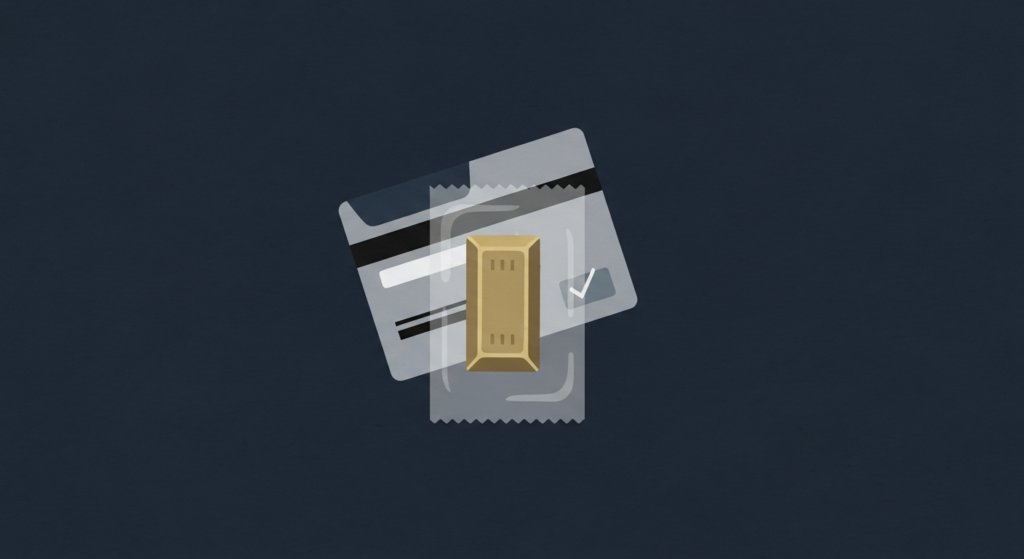
Most modern minted gold bars from major refiners come with an assay certificate that certifies the bar’s exact weight and purity — often built right into tamper-evident packaging, like PAMP Suisse’s CertiPAMP card, rather than supplied as a loose sheet of paper. Larger cast bars and older bars may have no certificate and rely on stamped hallmarks instead. A certificate helps with resale, but where you buy matters more than the paper that comes with it.
A certificate sounds like proof, and to a point it is. But a gold bar’s real authenticity comes from the refiner that made it, the seal it ships in, and the dealer you bought it from — not a printed card on its own. Here’s what these certificates actually certify and how much weight they carry.
What an assay certificate actually certifies
An assay is a lab test that measures the metal content of a bar. An assay certificate is the refiner’s signed statement of the result: this bar weighs exactly what it claims and is the stated fineness — typically .9999 fine (often written “four nines,” meaning 99.99% pure gold). It usually lists the refiner’s name, the bar’s weight, its purity, and a unique serial number.
What a certificate does not do is guarantee the bar in your hand is the one described. The card and the metal are only meaningfully linked when the serial numbers match and the packaging seal is intact. That’s why the format of modern bars matters as much as the document itself.
Serial numbers and tamper-evident assay cards
The major LBMA-accredited refiners — PAMP Suisse, Valcambi, Argor-Heraeus, the Royal Canadian Mint, the Perth Mint — moved away from loose paper years ago. Most small minted bars (1 gram up to roughly 100 grams) now ship sealed inside a clear, tamper-evident plastic card. PAMP calls its version CertiPAMP; the assay details and serial number are printed on the card, and the bar is welded inside.
The serial number stamped on the bar matches the number on the card. The seal is the security feature: if the plastic has been cut, melted, or re-sealed, it shows. A buyer can verify the serial, confirm the seal is original, and feel reasonably confident without sending the bar for a fresh assay. For more on how this fits with hallmarks and other checks, see our guide to authenticating gold.
Keep the bar in its sealed packaging
This is the part people get wrong. The assay card and seal are part of the bar’s value. Once you crack the package open, you’ve broken the chain of custody — a future buyer can no longer trust that the serial-numbered bar inside is untouched.
Larger and older bars: hallmarks instead
Big cast bars — think 1 kilo and up, including the 400-ounce “Good Delivery” bars held by institutions — often come without an individual assay card. They rely on the refiner’s stamped hallmark (weight, fineness, serial, refiner mark) and, at the wholesale level, on chain-of-custody records rather than a consumer-facing certificate. Older bars from the pre-tamper-evident era may also arrive bare. That doesn’t make them fake; it means verification leans more on hallmarks, weight-and-dimension checks, and trusted sourcing. We cover the bar types and their trade-offs in gold bars explained.
What about gold coins?
Bullion coins are a different case. An American Eagle, Canadian Maple Leaf, or Krugerrand is minted by a national authority, and its weight and purity are backed by that government — the coin itself is the credential, so it doesn’t need (and doesn’t come with) an assay certificate. The exception is graded collectible coins, which ship in sealed slabs from grading services like PCGS or NGC; there the certificate is about condition and grade, not basic purity.
Certificates help, but sourcing matters more
A certificate raises confidence and smooths resale. It is not, by itself, proof of authenticity — cards and serial numbers can be forged, and a real certificate paired with a swapped bar is the classic scam. The stronger protection is buying from a reputable dealer in the first place: established bullion dealers and mints, not a marketplace listing on Amazon or eBay where counterfeit risk is real. Start with our overview of how to buy gold to see where reputable sourcing fits the whole process.
Do all gold bars come with a certificate?
No. Most modern minted bars (1g–100g) from major refiners ship in a tamper-evident assay card that serves as the certificate. Larger cast bars and older bars often have none and rely on stamped hallmarks and trusted sourcing instead.
Should I open the sealed packaging to inspect my bar?
Generally no. The seal and matching serial number are part of the bar’s verified value. Breaking the package can reduce resale value and may force a future buyer to pay for a re-assay. Leave minted bars sealed unless you’re certain you’ll never resell.
Do gold coins need certificates like bars do?
Bullion coins don’t — their weight and purity are backed by the issuing government, so the coin itself is the credential. The exception is graded collectible coins, which come in sealed slabs certifying condition and grade rather than basic purity.