How Does a Gold IRA Rollover Work?

Straight answer
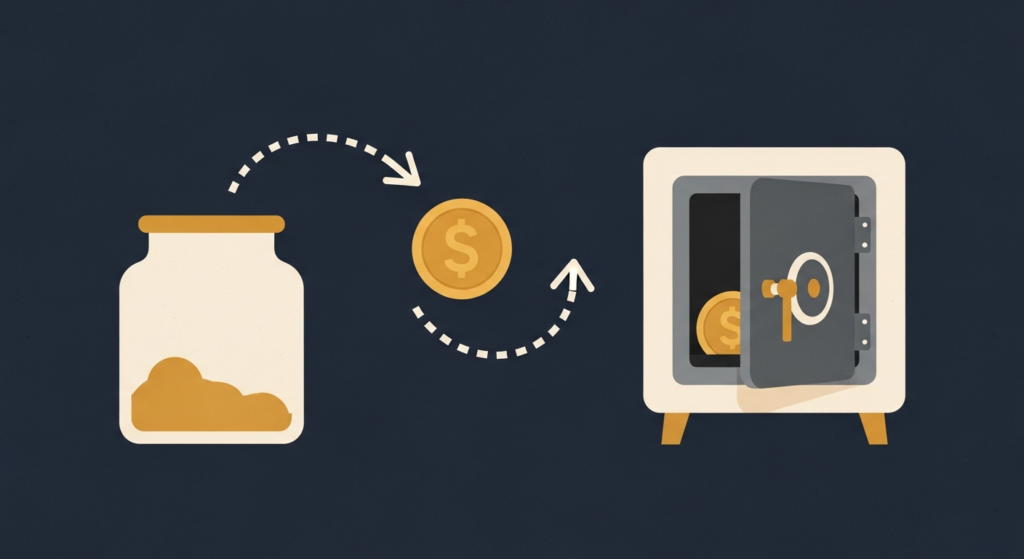
A gold IRA rollover works in three steps: you open a self-directed IRA with a specialized custodian, move money from an existing 401(k) or IRA into it, then have the custodian buy IRS-approved metals that ship to an approved depository. The safest way to move the funds is a direct (trustee-to-trustee) transfer — the money never touches your hands, so nothing is withheld and nothing is taxed. The risky alternative is a 60-day indirect rollover, where the funds are paid to you first; miss the 60-day window and you can owe income tax plus a penalty. Rollovers have no dollar cap, but the metal-buying step is where most people quietly overpay.
“Rollover” sounds like one action, but it’s really an account opening followed by a money transfer and a purchase. Each step has a right way and a costly way. Here’s the order, the two transfer methods, what’s actually eligible to move, and the trap waiting at the end.
The steps, in order
A gold IRA rollover follows the same sequence almost every time:
- Open a self-directed IRA with a custodian that allows physical metals. A normal brokerage IRA won’t hold bullion, so you need a custodian built for this. Compare options on our gold IRA custodians guide before you commit.
- Fund the account by moving money from an existing retirement plan — a 401(k) from an old job, a traditional IRA, or a similar plan — into the new self-directed IRA.
- Choose and buy the metals. The custodian works with a dealer to purchase IRS-approved gold or silver using your IRA funds.
- Store the metal at an approved depository. The custodian arranges shipment to an IRS-approved vault. You cannot legally keep IRA metal at home.
For the full mechanics, paperwork, and timing, see the deep guide on how a gold IRA rollover works. This page is the short version.
Direct transfer vs. 60-day indirect rollover
How you move the money matters more than most people realize, because one method is nearly foolproof and the other has a deadline that can cost you.
| Method | Who touches the money | Tax risk |
|---|---|---|
| Direct (trustee-to-trustee) | Goes plan-to-custodian; you never receive it | None if done correctly; nothing withheld |
| Indirect (60-day) | Paid to you, then you redeposit | Taxed and possibly penalized if not redeposited within 60 days |
With a direct transfer, the funds flow from your old plan straight to the new custodian. Because the check is never made out to you, there’s no mandatory withholding and no taxable event. This is the method most people should use.
With a 60-day indirect rollover, your old plan pays the money to you, and you have 60 days to redeposit the full amount into the new IRA. A 401(k) plan is generally required to withhold 20% for taxes, yet you must redeposit the full pre-withholding amount to avoid tax on the shortfall. Miss the 60-day window and the IRS may treat the whole distribution as taxable income, plus a 10% early-withdrawal penalty if you’re under 59½.
What’s eligible to roll over
Most tax-advantaged retirement money can move into a self-directed IRA, but timing and employment status matter.
- Old 401(k)s, 403(b)s, and TSPs from former employers are usually eligible — you no longer work there, so the plan generally allows you to roll the balance out.
- Traditional and SEP/SIMPLE IRAs can typically transfer directly into a self-directed IRA.
- Your current employer’s 401(k) often cannot be rolled over while you’re still employed there. Some plans permit an “in-service” withdrawal after a certain age, but many don’t — check with your plan administrator first.
One thing that does not limit a rollover: the IRS annual contribution cap. That cap applies to new yearly contributions, not to money you’re moving between retirement accounts. A rollover from a 401(k) or IRA has no dollar limit.
The dealer-spread trap at the buying step
The transfer can go perfectly and you can still get hurt — at the moment the custodian buys your metal. Dealers charge a markup over the spot price, and that spread is where the real cost hides.
- Typical bullion spreads run roughly 5–15% all-in; “exclusive,” proof, or numismatic coins can be far higher.
- A 20–30% premium on “special” coins quietly eats a big chunk of your rollover on day one.
- Ask for the price as a percentage over spot, in writing, before approving any purchase.
Plain, widely traded bullion (such as American Eagles or standard bars) keeps that spread lowest. The metals also have to meet IRS purity rules — gold at .995+, silver at .999+ — and collectible coins generally don’t qualify.
How long does a gold IRA rollover take?
A direct transfer commonly takes about one to three weeks, depending on how quickly your old plan releases the funds. Indirect rollovers add the 60-day redeposit clock and more room for error.
Will I owe taxes on a gold IRA rollover?
A correctly executed direct, trustee-to-trustee rollover is not a taxable event. Taxes and a possible penalty arise mainly with a 60-day indirect rollover that isn’t redeposited in time. This is general information, not tax advice — confirm your situation with a tax professional.
Can I roll over my current employer’s 401(k)?
Often no, not while you still work there. Many plans only allow rollovers after you leave, though some permit in-service withdrawals past a certain age. Ask your plan administrator.