Canadian Silver Maple Leaf: Buying Guide

Straight answer
The Canadian Silver Maple Leaf is a one-ounce, .9999 fine silver bullion coin from the Royal Canadian Mint — slightly purer than the American Silver Eagle and usually carrying a modestly lower premium. It is IRA-eligible and recognized worldwide, which makes it a strong, low-cost way to own physical silver. The main trade-off: it has a history of “milk spot” surface marks, and inside the United States the Silver Eagle still edges it on instant recognition.
If you want the most metal per dollar in a government coin, the Silver Maple Leaf is one of the easiest answers in bullion — high purity, broad recognition, and a premium that often runs a touch below its American counterpart.
What the Silver Maple Leaf is
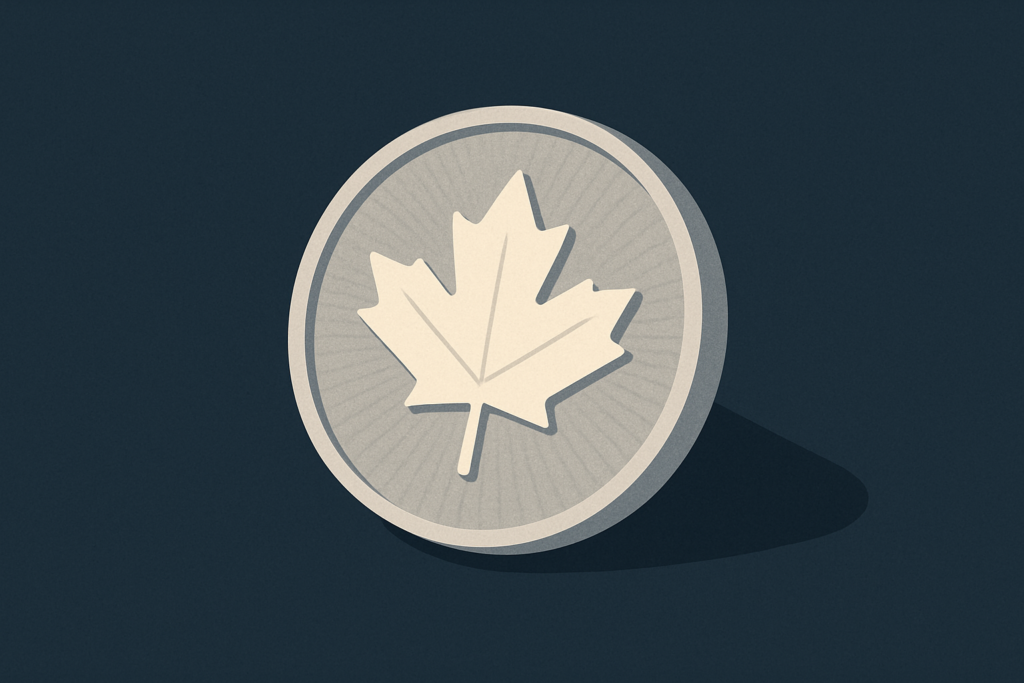
The Silver Maple Leaf is the Royal Canadian Mint’s flagship silver bullion coin, first issued in 1988. Each standard coin holds one full troy ounce of .9999 fine silver — four nines, marginally purer than the .999 (three nines) used in the American Silver Eagle. It carries a $5 Canadian face value as legal tender, though like all bullion coins its real worth is set by its metal content, not its denomination. The obverse shows the reigning monarch; the reverse carries the sugar maple leaf the coin is named for.
That purity figure is mostly a talking point rather than a practical advantage — the difference between .999 and .9999 is a sliver of silver you will never notice when you sell. What matters more is that the coin is sovereign-minted, weight-and-purity guaranteed by Canada, and accepted by dealers across the globe.
| Specification | Detail |
|---|---|
| Mint | Royal Canadian Mint |
| Metal content | 1 troy oz silver |
| Fineness | .9999 (purer than the .999 Silver Eagle) |
| Face value | $5 CAD (legal tender) |
| Diameter | ~38 mm |
| First issued | 1988 |
| Security features | Radial-line background + micro-engraved laser mark; MintShield anti-tarnish coating |
| Typical premium | ~12–20%+ over spot; often slightly below the Silver Eagle |
| IRA-eligible | Yes (meets the .999+ silver standard) |
Treat those figures as directional. Silver premiums are a larger share of price than gold premiums simply because silver costs so little per ounce, and the exact markup moves with demand, dealer, and how many you buy at once. For the full mechanics, see our guide to premiums over spot.
Why buy it: purity, security, and price
Three things make the Maple Leaf a buyer’s favorite. First, purity: at .9999 fine it edges out the Silver Eagle on paper, which appeals to people who want the cleanest possible bullion. Second, security. The Royal Canadian Mint adds anti-counterfeit features many other bullion coins lack — a precisely machined radial-line pattern that produces a light-diffraction effect across the coin’s face, and a micro-engraved laser mark (a tiny maple leaf with the issue year inside it) that is extremely hard to fake. For a heavily counterfeited metal like silver, that built-in verification has real value.
Third, and often decisive, is price. The Maple Leaf frequently trades at a modestly lower premium than the American Silver Eagle — sometimes a dollar or two less per coin. Over a meaningful stack, that gap adds up. If your goal is to accumulate the most ounces per dollar in a recognized government coin, the Maple Leaf is usually the cheaper of the two marquee options. It also slots neatly into a broader silver-stacking plan; see buying silver for how it fits alongside bars and rounds, and the best silver coins to buy for how it compares to the field.
The downsides, and who should skip it
No bullion coin is the right pick for everyone. The Maple Leaf’s best-known weakness is cosmetic: milk spots. These are small, cloudy white blemishes that can appear on the surface over time, a byproduct of residue left in the minting process reacting with the silver. They do not change the coin’s metal content or melt value, but they look unattractive and can shave a little off the price when a buyer is fussy about appearance.
To address this, the Royal Canadian Mint introduced its MintShield coating, designed to reduce the white spotting. It has helped, but spots are still occasionally reported even on coated coins, so it is fair to call it a mitigation rather than a cure. If pristine, eye-clean surfaces matter to you, buy from a dealer with a sensible return or exchange policy and inspect on arrival.
- Your priority is the broadest recognition inside the US — the American Silver Eagle is the default coin most US dealers and buyers reach for first.
- You are bothered by cosmetic flaws and would not tolerate any milk-spotting risk on a coin you might resell to a picky buyer.
- You want the absolute lowest cost per ounce — generic silver rounds and bars carry lower premiums than any government coin (at the cost of recognition).
If US-specific recognition is your top concern, read the American Silver Eagle buying guide and weigh the small premium difference against how and where you expect to sell.
How its premium behaves
Because silver is inexpensive per ounce, the premium is a bigger slice of what you pay than it is on gold — commonly in the low double digits as a percentage over spot, and higher on small lots. The Maple Leaf’s premium tends to sit just under the Silver Eagle’s, but both move with demand. In periods of heavy retail buying, government silver coins can spike to premiums well above their normal range, sometimes far more than bars. When that happens, the cheapest way to add ounces shifts toward bars and rounds, and the coin’s premium edge over the Eagle narrows or widens unpredictably. Watch the premium, not just the spot price, on the day you buy.
Remember that every coin is a round trip: you buy above spot and sell below it. The Maple Leaf’s strong liquidity protects your sell-side price — a recognized government coin is easy to offload at a tight spread — which is part of what the premium pays for.
Where to buy, and avoiding fakes
Buy from established bullion dealers — reputable online sellers, or a trusted local coin shop. Online dealers usually win on premium for standard bullion; local shops win on immediacy, privacy, and small lots. Avoid open marketplaces like Amazon and eBay for bullion: counterfeit risk is higher and your recourse is weaker. Vet any dealer on years in business, a real address and phone, transparent all-in pricing, a published buy-back policy, and insured shipping; our guide to how to vet a dealer walks through it.
The Maple Leaf’s radial lines and micro-engraved mark are genuine anti-counterfeit aids — a real coin shows a uniform light pattern across the radial field and the tiny laser-etched maple leaf with the year. Counterfeits exist for every popular silver coin, so buy from trusted sources, and if you ever want to verify a coin, basic checks (magnet, weight and dimension against the published specs, ping test) catch most fakes. See buying silver for the practical buying workflow.
IRA eligibility
The Silver Maple Leaf meets the IRS fineness standard for silver in a precious-metals IRA (.999 or finer), so it is IRA-eligible. As with all IRA metal, it must be held at an approved depository, not stored at home — home storage of IRA metal is prohibited and can trigger a taxable distribution and penalties. If you are weighing a metals retirement account, our gold IRA guide covers custodians, fees, and how silver fits.
Is the Canadian Silver Maple Leaf better than the American Silver Eagle?
Neither is universally better — they hold the same one ounce of silver. The Maple Leaf is slightly purer at .9999 versus the Eagle’s .999 and usually costs a modestly lower premium, which makes it the cheaper way to stack recognized government silver. The Silver Eagle leads on instant recognition inside the United States and has a longer cosmetic track record. Choose the Maple Leaf for purity and price, the Eagle for US-specific familiarity.
What are milk spots on a Silver Maple Leaf?
Milk spots are small, cloudy white marks that can appear on the surface of silver bullion coins, caused by minting residue reacting with the silver over time. They affect appearance, not the coin’s metal content or melt value. The Royal Canadian Mint introduced a MintShield coating to reduce them, which helped, though spots are still occasionally reported. Buy from a dealer with a return policy and inspect coins on arrival if surface quality matters to you.
Is the Silver Maple Leaf IRA-eligible?
Yes. At .9999 fine it exceeds the IRS minimum fineness for silver in a precious-metals IRA, so it qualifies. Like all IRA metal, it must be held at an approved depository rather than at home — storing IRA metal at home is prohibited and can be treated as a taxable distribution with penalties. Confirm eligibility and depository arrangements with your custodian before buying.
What is the premium on a Silver Maple Leaf?
Silver coin premiums are typically in the low double digits as a percentage over spot and run higher on small lots, because silver costs so little per ounce. The Maple Leaf’s premium usually sits just below the American Silver Eagle’s. Premiums spike during heavy retail demand, so check the premium — not only the spot price — on the day you buy, and verify it live with the dealer.