Will Gold Prices Go Up in 2026?

Straight answer
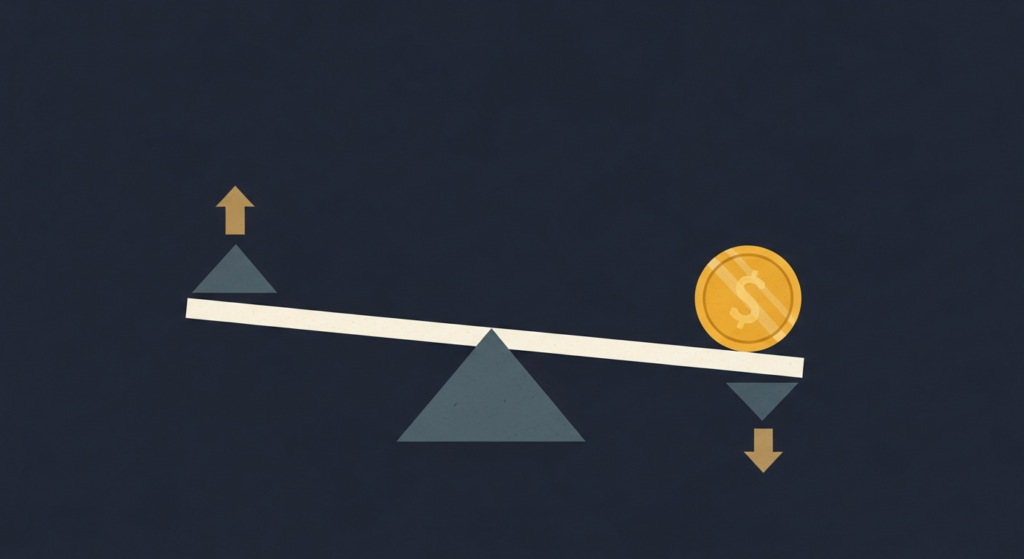
Nobody can reliably say. Some major banks have published higher 2026 targets while others expect a pullback after gold’s big run, and short-term price direction is essentially unforecastable. Forecasts are conditional opinions built on assumptions that may not hold, not facts you can plan around. A sensible investor decides on a target allocation, buys on a schedule, and ignores single-year price calls.
“Will gold go up in 2026?” is the wrong question to bet money on, because the honest answer is that no one knows. What follows is the case the bulls make, the case the bears make, and why both are opinions rather than predictions you can act on with confidence.
Why nobody can reliably forecast a single year
Gold pays no dividend, interest, or rent, so its price is set almost entirely by what buyers and sellers feel about it on a given day. That makes the short run a tug-of-war between the forces that move gold — real interest rates, the US dollar, and fear — and those forces depend on events nobody can schedule: a central-bank decision, an election, a war, a surprise inflation print.
Forecasts from big banks are real research, but they are conditional: “gold reaches X if rates fall and central banks keep buying.” When that line travels through the press and into a dealer ad, the “if” quietly disappears and a possibility gets dressed up as a prediction. The same firms revise their numbers constantly and have been confidently wrong before. A target tells you about the forecaster’s assumptions, not the future.
The bullish case analysts cite
Reasonable people see several reasons gold could keep climbing in 2026. Treat these as the arguments behind the higher targets, not as guarantees:
- Central-bank buying. Many central banks have been steady net buyers of gold in recent years, partly to diversify away from the dollar. If that demand persists, it puts a floor under the price.
- Geopolitical risk. Wars, trade tensions, and political uncertainty tend to push money toward assets that are nobody’s promise to pay. Gold often benefits when investors feel nervous.
- Possible rate cuts. Gold competes with interest-paying assets. If a central bank cuts rates, the opportunity cost of holding a metal that pays nothing falls, which can support the price.
- Deficits and debt. Large and rising government deficits worry some investors about the long-run value of paper currencies, and gold is a traditional hedge against that concern.
Each of these is plausible. None of them is certain to play out in any particular twelve-month window, which is exactly why they support a range of targets rather than a single number.
The bearish case analysts cite
Other analysts expect gold to stall or pull back, and their reasoning is just as serious:
- Rising real rates. If inflation-adjusted interest rates climb, bonds and cash start paying enough to lure money away from gold. Higher real rates have historically been one of gold’s biggest headwinds.
- A strong dollar. Gold is priced in dollars, so a stronger dollar usually makes it more expensive abroad and tends to weigh on the price.
- Profit-taking after a big run. Gold has had a strong stretch and reached record highs. After moves like that, some investors lock in gains, and prices can fall sharply for a while — gold has gone through multi-year flat or falling periods before.
Notice that the bullish and bearish lists draw on the same handful of drivers, just with opposite assumptions about which way they break. That is why credible forecasters land all over the map, and why a wide spread of targets is itself a signal that the year is genuinely unknowable.
What a sensible investor does instead of guessing
Since the single-year direction is unforecastable, stop trying to forecast it. The investors who do well with gold over time are not the ones who called the top or bottom; they are the ones who decided on a plan and stuck to it.
- Decide on an allocation, not a price. Most advisors cap precious metals at roughly 5% to 10% of a portfolio. Pick a target percentage based on your goals and nerves, and let that — not a headline — drive how much you hold.
- Dollar-cost average. Buy a fixed amount on a regular schedule regardless of the week’s price. When gold is high your money buys a little less; when it dips it buys a little more. This removes the pressure of timing a record-high market.
- Ignore single-year calls. A 2026 target, up or down, should not change a long-term plan. If the case for owning some gold made sense for you, it does not hinge on whether next year is green or red.
If you are still weighing whether to start at all, whether it is smart to buy gold now depends on your timeline and purpose far more than on any price target. And if you want to understand where the dramatic numbers come from before you trust them, our guide to how gold price forecasts work walks through why even the well-researched ones deserve a heavy dose of skepticism.
Will gold prices go up in 2026?
No one can reliably say. Some major banks have published higher 2026 targets, while others expect a pullback after gold’s strong run, and short-term direction is essentially unforecastable. These targets are conditional opinions built on assumptions about rates, the dollar, and central-bank demand that may or may not hold. Treat any single-year forecast as an opinion, not a fact.
Which analysts are right about gold for 2026?
There is no way to know in advance, and that is the point. Credible forecasters land all over the map because they make different assumptions about the same drivers — real rates, the dollar, geopolitics, and central-bank buying. A wide spread of targets is itself a sign that the year is genuinely unknowable, so you should not plan around any one of them.
If I think gold will rise in 2026, should I buy a lot now?
Concentrating savings on a one-year hunch is risky, because gold pays no income and can correct sharply after a big run-up. A steadier approach is to decide on a small target allocation, often 5 to 10 percent of a portfolio, and buy on a regular schedule through dollar-cost averaging rather than betting on a single year’s direction.