Gold-Silver Ratio Calculator

Straight answer
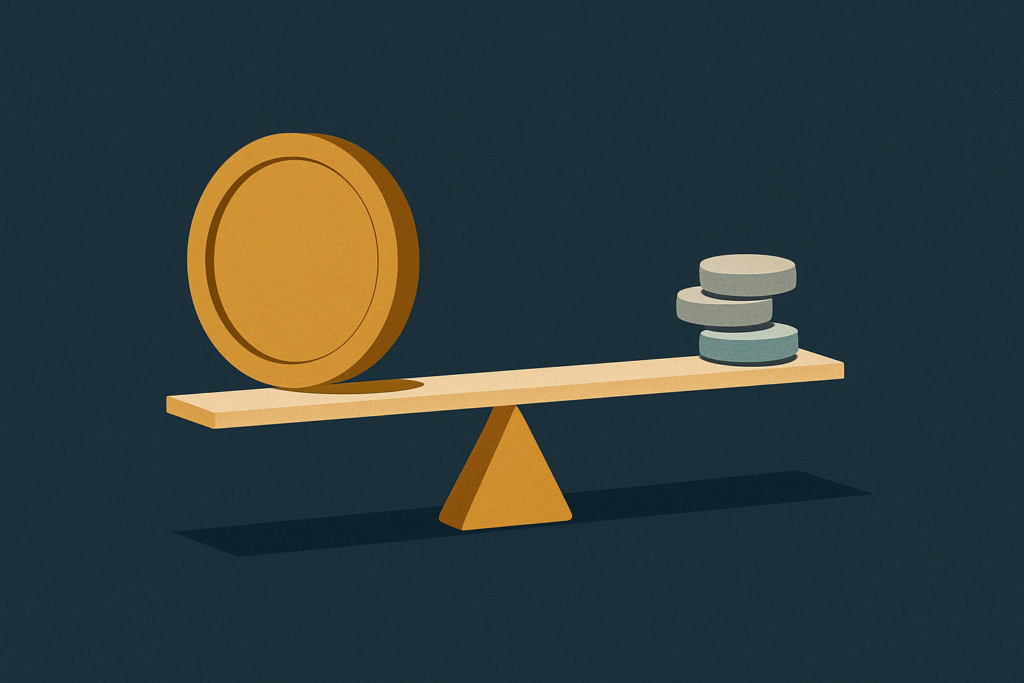
The gold-silver ratio is how many ounces of silver it takes to buy one ounce of gold — divide the gold spot price by the silver spot price. A high ratio (historically above ~80) means silver is cheap relative to gold; a low one (below ~50) means the reverse. It’s a useful relative-value gauge, not a buy signal on its own.
Traders watch this ratio to decide which metal looks better value today. Over the last century it has swung roughly between 30 and 100, averaging somewhere in the 50s–70s. Enter the two spot prices to see where it sits now.
Historical band is roughly 30–100; the modern average sits in the 50s–70s. A high ratio favors silver buyers, a low one favors gold — but the ratio can stay stretched for years.
How to read the ratio
A ratio of 80:1 means one ounce of gold trades for eighty ounces of silver. Some long-term investors use the “80/50 rule” as a rough framework: lean toward silver when the ratio is high (around 80+) and toward gold when it’s low (around 50 or below), rebalancing between the two over time. It’s a discipline for relative value, not a market-timing guarantee.
Why the ratio moves
Silver is far more volatile than gold and carries heavy industrial demand — solar panels, electronics, electric vehicles — so it tends to fall harder in downturns and spike faster in booms. That’s what drives the ratio to extremes. Gold behaves more like a monetary metal, responding to real interest rates and the dollar. When fear dominates, gold often leads and the ratio widens.
Using it sensibly
The ratio tells you relative value between the two metals, never whether either is cheap in absolute terms. Pair it with a view on long-run returns and a sensible overall allocation before acting. More context lives in our look at the gold-silver ratio and buying silver.
What is a “normal” gold-silver ratio?
Over the past several decades it has mostly ranged from about 50 to 90, averaging in the 50s to 70s. Across longer history it has touched the low 30s and exceeded 100 briefly, so “normal” is a wide band, not a fixed number.
Does a high ratio mean I should buy silver?
It means silver is cheap relative to gold, which many long-term investors treat as a reason to favor silver. But the ratio can stay high for years, and silver’s volatility cuts both ways, so it’s one signal among several.
Which spot prices should I enter?
Use the current per-troy-ounce spot for each metal from the same source and moment. Premiums and product type don’t matter here — the ratio is built from spot prices only.