Gold Coins vs Bars vs Rounds: Which Form to Buy

Straight answer
For most buyers, government-minted bullion coins (like the American Eagle or Canadian Maple Leaf) are the safest default: they cost a little more over spot but are the easiest to verify and resell. Bars give you the most metal for your money and suit anyone stacking weight cheaply. Rounds sit in between — coin-shaped, privately minted, cheaper than coins but slightly less recognized. The right form depends on whether you value low cost or easy resale; you usually can’t max out both at once.
Physical gold comes in three main shapes, and the differences are smaller than they look — same metal, same purity, different packaging and trade-offs in price and liquidity. Here is how coins, bars, and rounds compare, and which suits which buyer.
The three forms, in one breath
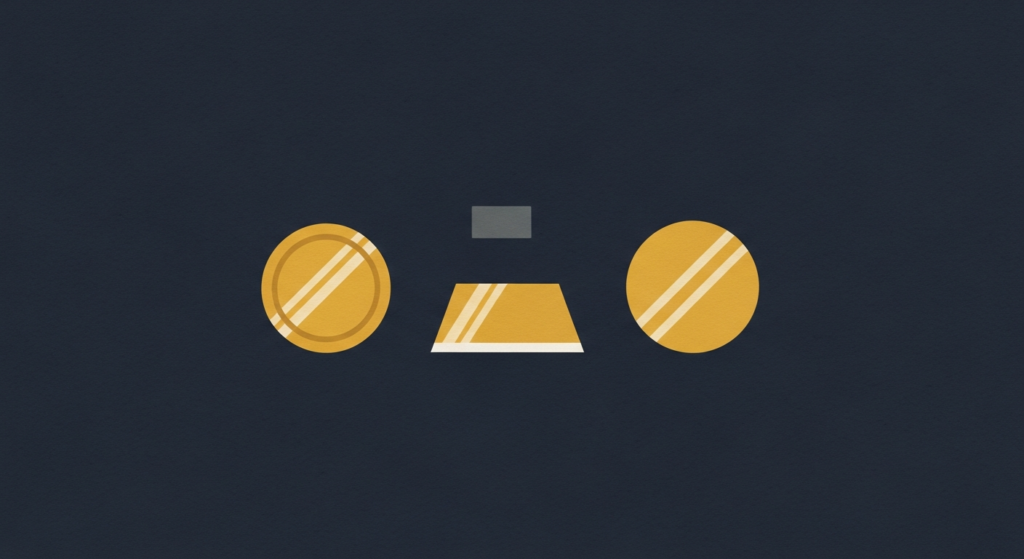
All three are typically .999 or .9999 fine gold sold by weight. What changes is who made them and how the market treats them:
- Coins are struck by a national mint, carry a face value and a country’s backing, and are legal tender. Think American Gold Eagle, Canadian Maple Leaf, Krugerrand, Buffalo, Britannia. They are the most recognized and most liquid form — and they carry the highest premium over spot.
- Bars are rectangular ingots from refiners (PAMP Suisse, Valcambi, the Royal Canadian Mint, Perth Mint, Argor-Heraeus). They range from 1 gram to 1 kilogram and beyond. Bars carry the lowest premium per ounce, so you get the most metal per dollar.
- Rounds are coin-shaped discs made by private mints. They look like coins but have no face value and no government behind them. Premiums fall between bars and coins.
For a deeper look at each, see our pages on gold coins explained and gold bars explained.
The trade-off that drives everything: cost vs. liquidity
Every form sits somewhere on a single spectrum. On one end is lowest cost (you pay the least over the metal’s spot price). On the other is easiest resale (a dealer or private buyer instantly recognizes it and pays you close to spot without fuss). Coins lean toward easy resale; bars lean toward low cost; rounds sit in the middle.
That “over spot” markup is the premium, and it’s a round-trip cost — you buy above spot and sell below it. Understanding premiums is the single most useful thing a new buyer can learn, so it’s worth reading how premiums over spot work before you choose a form. A lower premium on a bar only helps if you can also resell it cleanly later.
| Form | Typical premium | Liquidity | Divisibility | Best for |
|---|---|---|---|---|
| Government coins | Highest (~3–8%) | Highest — instantly recognized, easy resale | Good (sold in fractional + 1 oz) | Beginners, anyone who values easy resale, gifting |
| Bars | Lowest (~2% on large bars) | Good for small bars; larger bars harder to resell | Low — a 1 kg bar is one big unit | Stacking weight cheaply, larger budgets |
| Rounds | Low (~3%) | Solid but slightly less universal than coins | Good (usually 1 oz) | Cost-conscious stackers who don’t need a mint’s name |
Figures are illustrative and move with the market, the product, and the dealer.
Typical premium by form
The cleanest way to see the cost difference is to compare the markup over spot you’d typically pay on each form, ounce for ounce:
The gap looks small in percentage terms, but on a large purchase it adds up — a few percent on tens of thousands of dollars is real money. The flip side: coins’ extra premium buys you the easiest resale and the strongest counterfeit deterrence, which can be worth more than it costs.
Sovereign coins: the recognized default
Government coins are the form most new buyers should start with. Their advantage isn’t the metal — it’s the trust. A dealer in any state, or a buyer across the country, knows an American Eagle on sight, knows its weight and purity, and will pay you near spot without testing or hesitation. That recognition is liquidity, and liquidity is what you’ll care about most on the day you sell.
They also come in fractional sizes — 1/10, 1/4, and 1/2 ounce — which full bars rarely match. If you may want to sell in small pieces, fractional coins give you that flexibility (at a higher premium per ounce). See fractional gold for when smaller units make sense.
Bars: the most metal per dollar
If your goal is to accumulate weight at the lowest cost, bars win. Premiums shrink as bar size grows — a 1-ounce bar costs more over spot than a 10-ounce bar, which costs more than a kilo bar. From LBMA-approved refiners, bars come sealed in tamper-evident assay cards that state weight and purity, which helps on resale.
The catch is divisibility and resale friction. A kilogram bar is roughly 32 troy ounces in one piece — you can’t sell a third of it. Larger bars also have a smaller pool of buyers and may need re-assaying if removed from their packaging, which slows the sale and can cost you. Smaller bars (1 oz and under) resell more easily but give back much of the premium advantage.
Rounds: the budget middle ground
Rounds are privately minted discs that look like coins but aren’t legal tender and carry no face value. Because no government strikes them, their premiums run lower than sovereign coins — often close to small bars — while keeping a coin’s convenient one-ounce, easy-to-handle format.
The trade-off is recognition. A round from a respected private mint is widely accepted, but it doesn’t carry the universal name-recognition of an Eagle or Maple Leaf, so some dealers test it more carefully or pay a hair less. For a cost-conscious buyer who plans to sell to a reputable dealer anyway, that’s a small price for the lower premium.
Fractional vs. full ounce — a note for every form
Across all three forms, smaller units cost more per ounce. A 1/10-ounce coin carries a much higher percentage premium than a 1-ounce coin; a 1-ounce bar carries more than a kilo bar. You’re paying for divisibility — the ability to sell or spend a little at a time. Decide upfront how you’d want to exit: if in small slices, lean fractional and accept the markup; if you’ll sell in bulk, larger units save money. Our fractional gold guide walks through that math.
So which should you buy?
A reasonable rule of thumb: beginners and resale-focused buyers default to government coins; weight-stackers on a budget mix in bars or rounds once they understand premiums and resale. Many buyers hold a blend — coins for liquidity, a bar or two for cheaper weight. Whatever you choose, buy from a reputable dealer and skip general marketplaces like Amazon or eBay, where counterfeit risk is real. Start at the How to Buy Gold hub to see how form fits into the rest of the process.
Are gold coins, bars, and rounds the same purity?
Usually yes — most modern bullion is .999 or .9999 fine gold. The American Gold Eagle is a notable exception at 22 karat (.9167), but it still contains a full ounce of gold; the rest is alloy for durability. Purity isn’t the deciding factor between forms — premium and liquidity are.
Which form has the lowest premium over spot?
Larger bars typically carry the lowest premium per ounce, followed closely by rounds, then sovereign coins. The gap is usually a few percentage points and varies by product, size, and dealer. Remember the premium is a round-trip cost — you also give some back when you sell.
Are privately minted rounds harder to sell than coins?
Slightly. Rounds from well-known private mints are widely accepted, but they lack the universal recognition of government coins, so a few dealers may test them more carefully or pay marginally less. If easy resale is your top priority, coins edge them out.
Should a beginner buy a big bar to save on premium?
Often not. A large bar’s low premium can be offset by harder resale — a smaller buyer pool, possible re-assaying, and no ability to sell in pieces. Many beginners are better served by recognized coins or smaller units, then scaling into larger bars once comfortable.